How KaiCalls places outbound calls.
KaiCalls answers calls first. When a call does go out, it is a callback, and it passes the same Do-Not-Call, calling-hours, and caller ID checks every time — enforced on our servers, not left to a setting.
Listed numbers are refused. If the list can't be read, the call waits.
US calling window, in the time zone of the person being called.
The owner's phone rings before the customer is ever dialed.
Two kinds of outbound call
A person calling back is not a robocall. We still check both.
The TCPA draws its sharpest lines around artificial and prerecorded voices. KaiCalls keeps the two kinds of call separate, and runs the core checks on both.
Two people talking
Human-dialed callbacks
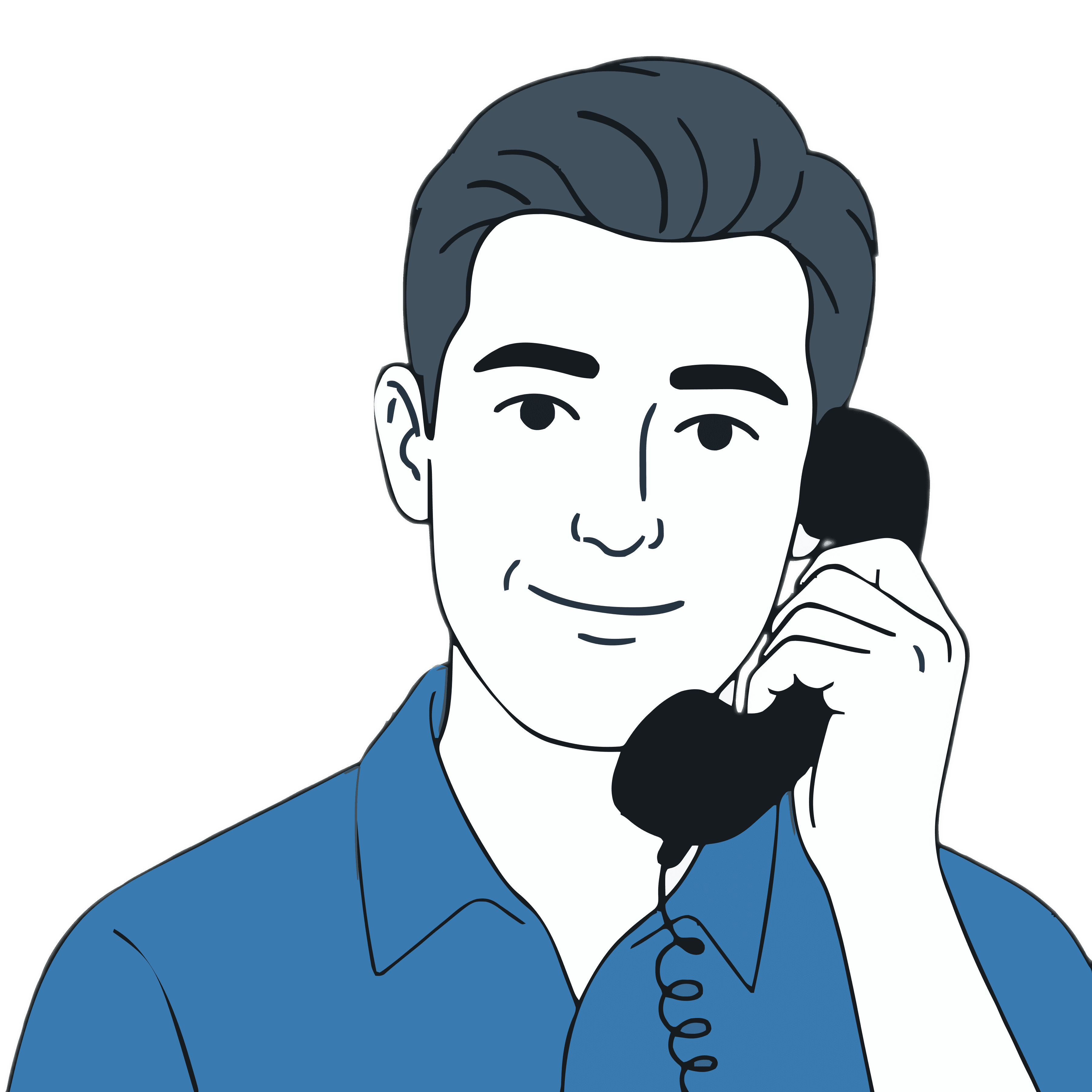
The owner taps "call" (or asks for a callback). KaiCalls rings the owner's own phone first. Only after the owner picks up does it dial the customer and connect the two. No artificial or prerecorded voice ever plays to the customer, and nothing is dialed automatically from a list.
Treated as a regulated call
Artificial-voice calls
Any call where the voice agent speaks to the person we dialed. The FCC treats AI-generated voices as 'artificial or prerecorded voice' under the TCPA, so we treat every one of these as a regulated call: the business must have that person's consent, and every call passes the checks below before it dials.
The controls
What every outbound call passes before it rings.
These run on our servers on every call. A business can't switch the Do-Not-Call, calling-hours, or caller ID rules off.
Do-Not-Call list, checked before every dial
Every outbound call to a customer — AI-voice or human-dialed — is checked against the business's Do-Not-Call list first. A listed number is refused. If the check itself can't run, the call is held, not placed.
Calling hours in the recipient's time zone
Calls only go out inside the recipient's local calling window — 8am to 9pm for US numbers. The time zone comes from the contact record, then the area code, then the business. Stricter country rules (no Sundays, no public holidays) apply abroad.
Opt-outs stick
A spoken "stop calling me" is detected after the call and adds the number to the Do-Not-Call list, and any queued callbacks for that number are canceled. STOP by text opts the number out of messages immediately.
Caller ID is always the business's own number
Outbound calls can only show a number the business owns and has verified with KaiCalls. There is no way to set an arbitrary caller ID, so the person called always sees who is really calling.
AI and recording disclosure
By default, on AI-voice calls the agent says in its first sentence that it is an automated assistant, and that the call is recorded when it is. States that require all-party consent to record get recording turned off unless the business confirms consent.
No cold lists from the phone line
When an owner asks Kai to call someone by voice, the call can only go to an existing contact, the owner must confirm it, and Kai asks whether that person agreed to be called if they were imported or added by hand.
Only reachable countries
Destinations are checked against the countries the account is permitted to call before either leg rings. An unapproved country is refused up front.
A record of every call
Each outbound call is logged with who started it, the caller ID used, the disclosure and recording decision, and why a blocked call was blocked. Consent and opt-out changes are kept in an audit log the business can review.
What the business owns
The parts of compliance only the business can do.
KaiCalls enforces the rules it can see. These depend on facts only the business has.
- Get prior express written consent before any artificial-voice marketing call. KaiCalls records consent it can see (inbound calls, web forms, SMS opt-in), but the legal duty to have it is the business's.
- Scrub sales calls against the National Do Not Call Registry. KaiCalls enforces the business's own Do-Not-Call list; it does not check the national registry.
- Honor opt-out requests you receive outside KaiCalls by adding the number to your Do-Not-Call list in the dashboard or by telling Kai.
- Do not upload purchased or scraped lists for outbound calling.
FAQ
Questions carriers and customers ask us.
If yours isn't here, ask — a real person answers.
Does KaiCalls place robocalls?+
No. KaiCalls is an inbound-first business phone line. Outbound calls are callbacks to people who already contacted the business, placed by the owner or at the owner's request, and every one passes the Do-Not-Call and calling-hours checks first.
Is a click-to-call callback an "artificial voice" call?+
No. The owner is rung first and talks to the customer directly — no recorded or AI voice plays to the customer. It still honors the Do-Not-Call list and calling hours, because we hold every call we place to the same bar.
Can a business turn the checks off?+
Not the Do-Not-Call check, the calling-hours check, or the caller ID rule on customer calls. They are enforced on the server, not in the app, so no setting or API call skips them.
Who do I contact about a call I received?+
Reply STOP to a text, say "stop calling me" on a call, or contact us. We will add the number to that business's Do-Not-Call list and look into the call.